

Dealing with Pigmentation & Sun Damage?
You’re not alone. Skin pigmentation problems are common and can significantly impact your confidence and facial appearance. Fortunately, effective treatments are available.
Pigmentation refers to areas of skin that appear darker than the surrounding skin due to increased melanin production. While some pigment changes are temporary, others can be more persistent and are influenced by factors such as sun exposure, hormones, inflammation and genetics.
Uneven skin tone can develop gradually over time or appear after events such as acne, skin irritation or inflammation. Understanding what type of pigmentation you’re dealing with is key, as different causes respond differently to skincare and
treatment.
To view recommended routines for sun damage & pigmentation...
How to Recognise Sun Damage
Pigmentation can appear in many different forms depending on its cause. Common signs include:
- Uneven skin tone
- Dark patches or areas of discolouration
- Sunspots (age spots)
- Brown marks left after acne or inflammation
- Blotchy or patchy pigmentation
- Areas of skin that appear darker than the surrounding skin
What Causes Pigmentation?
Pigmentation develops when melanocytes (the cells that produce melanin) become overactive. This causes excess pigment to build within the skin, resulting in darker patches or uneven skin tone.
A number of factors can trigger this process, including:
- UV exposure
- Hormonal changes
- Acne and inflammation
- Skin injury
- Genetics
- Ageing
Once pigment is triggered, it can take time for the skin to regulate melanin production again. This is why consistency and daily sun protection are essential when managing pigmentation.
Common Types of Pigmentation
Post-inflammatory hyperpigmentation (PIH): Dark marks that appear after inflammation such as acne, eczema or skin injury. PIH occurs when the skin produces excess melanin during healing and is more common in darker skin tones.
Melasma: A chronic pigment condition that often appears as symmetrical brown or grey-brown patches, typically on the cheeks, forehead or upper lip. Hormones and sun exposure are major contributing
factors.
Solar lentigines (sunspots): Pigmented spots that develop from cumulative sun exposure over time. These are very common and tend
to increase with age.
What Makes Pigmentation Worse?
- Sun exposure
- Forgetting sunscreen
- Picking skin
- Aggressive skincare
- Heat
- Inflammation
Why Daily Sun Protection Matters
You don't need to get sunburnt for UV exposure to damage your skin. Small amounts of daily sun exposure accumulate over time, contributing to pigmentation, premature ageing and collagen breakdown. This is called photo-ageing. Over time, it leads to:
Fine lines and wrinkles: The breakdown of collagen and elastin creates a less plump and supple complexion.
Age spots: These brown or black spots are caused by overproduction of melanin, a natural skin pigment.
Loss of elasticity: Skin becomes saggy and less firm.
Rough texture: The skin's surface becomes uneven and dull.
Building a Routine for Brighter, more Even Skin Tone
- Cleanse: Use a gentle cleanser that supports the skin barrier.
- Exfoliate – Chemical or physical exfoliation used strategically to reveal brighter skin.
- Treat: Incorporate pigment-targeting ingredients consistently.
- Hydrate: Healthy skin responds better to active ingredients.
- Protect: Apply a broad-spectrum SPF every single morning – even on cloudy days.

Ingredients That Help Improve Pigmentation
Niacinamide: helps regulate
pigment transfer and improve overall skin tone.
Vitamin C: supports antioxidant
protection and helps brighten uneven skin tone.
Retinoids: promote healthy cell turnover and help improve the appearance of pigmentation over time.
Lactic acid: supports gentle exfoliation and improves skin texture and tone.
Zinc: helps calm inflammation that can contribute to post-inflammatory pigmentation.
Learn more about these ingredients in our Ingredient Glossary.
Pigmentation & Brightening Routine
AM Routine
Pigmentation & Brightening Routine
AM Routine

1. Active Cleanse
A deeply refreshing, non-stripping cleanser with AHAs and activated charcoal to brighten and refine without irritation.
How to use: Apply 1–2 pumps to wet skin, massage for 20–30 seconds, rinse.

2. Brighten & Correct
Your powerhouse pigment-inhibiting serum with 10% niacinamide (Vitamin B3), SymWhite, peptides, and algae extract.
Targets: Melanin overproduction, uneven tone, dullness, post-inflammatory pigmentation.
How to use: Apply 2–3 drops to dry skin. Let dry before hydrating.

3. Hydrate Rich
Rich in EGF, peptides, resveratrol and ATIP (Vitamin C derivative), Hydrate Rich boosts luminosity and helps replenish moisture levels often compromised by pigment-fighting routines.
How to use: Apply 2–4 pumps evenly.

4. SPF50+
Daily sunscreen is absolutely essential for pigment control. Pigment cannot be treated effectively without consistent UV protection.
––––––––––––––––––––––––––––––
PM Routine
1. Active Cleanse
Repeat to remove buildup, makeup and sunscreen. Do not use as an eye makeup remover as the AHA ingredients may irritate the sensitive skin around the eyes.
Note: Do not use Active Cleanse to remove eye makeup due to the AHA content.
How to use: Apply 1–2 pumps to damp skin, leave for 20–30 seconds, rinse.

2. Exfol Ultra
A high-performance AHA blend combined with peptides and Australian Caviar Lime to assist with cell renewal, brighten, and improve skin texture.
How to use: Apply 2–3 drops to clean, dry skin. Avoid eye area.
Tip: This is your glow step. Start slowly (2–3 x weekly) and build up to nightly, if tolerated.

3. Night Repair
Retinaldehyde (Vitamin A) + niacinamide (Vitamin B3) + peptides work together to address pigmentation at a deeper level, stimulate renewal, and improve overall clarity.
How to use: Apply 1 drop, evenly distribute. Can be mixed with Hydrate Rich to reduce initial irritation and make it easier to spread. Avoid eye area.
Note for sensitive users: Alternate nights between Night Repair and Exfol Ultra initially.
4. Hydrate Rich
Rich in EGF, peptides, resveratrol and ATIP (Vitamin C derivative), Hydrate Rich boosts luminosity and helps replenish moisture levels often compromised by pigment-fighting routines.
How to use: Apply 2–4 pumps to seal in moisture and cushion the actives.
Follow the full AM and PM routine for best results.
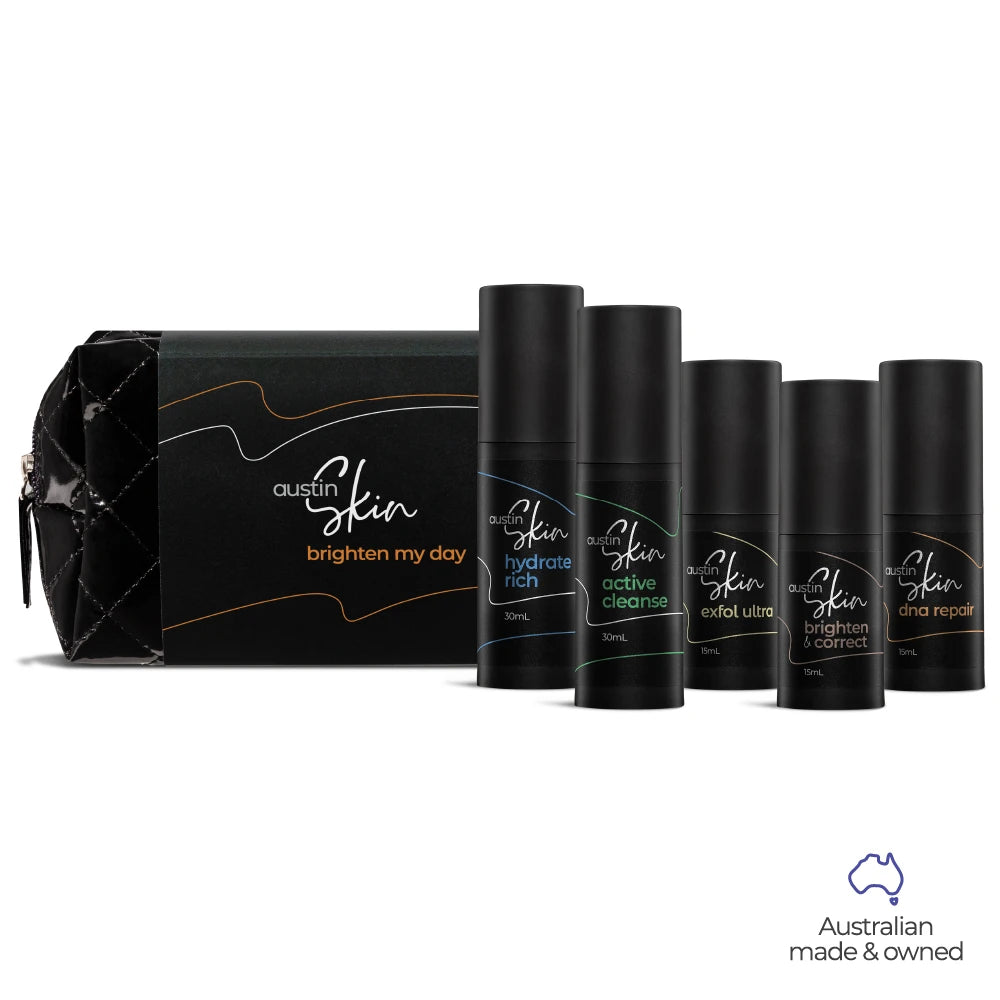
brighten my day
For those looking for a streamlined approach, our pigmentation-focused kits combine complementary products to reduce your existing pigmentation and help prevent new pigment from forming.
When You Should Seek Professional Help
If pigmentation changes suddenly, rapidly worsens, or new pigmented lesions develop, seek assessment from a qualified skin professional. Persistent melasma or severe pigmentation may also benefit from professional treatment alongside an appropriate skincare routine.
